Source Customized NFC Woven Wristband for Access Control
Find 30 customized nfc woven wristband options for access control, transportation, and cashless payments. Compare HF chip specs, PVC materials, and packing details from Chinese manufacturers to select the right RFID fabric bracelets for your project; compare the available evidence and request quotations based on your requirements.
Key considerations
Products List




Comprehensive Sourcing Guide
Customized NFC Woven Wristband Sourcing Guide
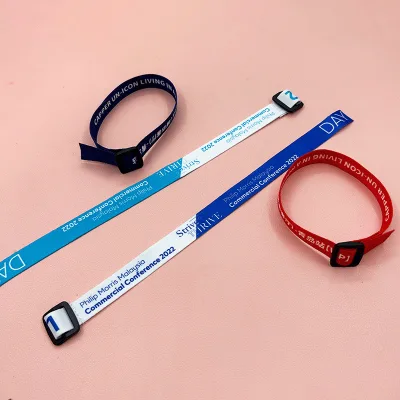
Sourcing customized NFC woven wristbands requires a clear understanding of the intersection between textile manufacturing and embedded radio-frequency identification technology. Buyers must recognize that these items are not merely fashion accessories but functional data carriers used in access control, transportation, and cashless payment systems. The customization process involves selecting specific chip types, such as HF or UHF, and determining the appropriate frequency for the intended application environment. This technical foundation dictates the performance of the wristband in real-world scenarios, making initial specification critical to avoid costly redesigns later in the supply chain.
The procurement strategy must also account for the physical attributes of the woven fabric, including width, length, and available colors. Suppliers often offer standard dimensions alongside fully customized options, allowing buyers to balance cost efficiency with brand-specific requirements. Understanding the packing methods, such as OPP bags or export cartons, is essential for logistics planning. Buyers should evaluate how the wristband’s material, typically PVC or woven fabric, interacts with the embedded chip to ensure durability and readability. This holistic view ensures that the final product meets both aesthetic and functional expectations.
Product Scope and Observed Listing Signals
The market for NFC woven wristbands presents a diverse range of product variations, with observed price points ranging from $0.06 to $3 per unit. This wide variance reflects differences in chip complexity, customization depth, and order volume. Minimum order quantities (MOQs) typically span from 1 to 2,000 pieces, offering flexibility for both small-scale trials and large-scale deployments. Buyers should note that lower MOQs often correlate with higher per-unit costs, while bulk orders may unlock significant economies of scale. Understanding these commercial signals helps in budgeting and negotiating favorable terms with potential suppliers.
Product listings frequently highlight features such as glow-in-the-dark capabilities, RFID functionality, and sport-oriented styles. These attributes indicate the versatility of the product category, catering to events, fitness tracking, and secure access applications. The observed packing configurations, such as 100 pieces per OPP bag or 5,000 pieces per carton, provide insight into the supplier’s operational capacity. Buyers should verify if the listed features align with their specific use case, as not all products may support every claimed attribute. Careful review of these signals ensures that the selected supplier can deliver the exact specifications required for the project.
Technical Specifications to Verify
Verifying the technical specifications of NFC woven wristbands is crucial for ensuring compatibility with existing infrastructure. Buyers must confirm the chip type, which can range from Low Frequency (LF) to High Frequency (HF) and Ultra-High Frequency (UHF). The reading range, often cited as 1 to 5 centimeters depending on reader power, is a key performance indicator that varies by chip and antenna design. It is essential to test samples with the intended readers to validate the claimed range and reliability. This step prevents integration issues and ensures seamless operation in access control or payment systems.
The physical dimensions of the wristband, including width and length, must be precisely defined to meet user comfort and security requirements. Available dimensions often include options like 45mm, 50mm, or 60mm in width, with lengths ranging from 165mm to 200mm. Buyers should also inquire about the customization options for logos, which may be printed or embossed in a convex style. The frequency of operation, typically high frequency for many applications, must match the reader’s specifications. Clear communication of these technical details with the supplier minimizes the risk of receiving non-compliant products.
Compliance and Safety Documentation
Compliance with international standards is a non-negotiable aspect of sourcing NFC woven wristbands, particularly for applications involving personal data or financial transactions. Buyers should request documentation confirming adherence to relevant certifications, such as ISO, RoHS, CE, and FCC. These certifications indicate that the product meets specific safety, environmental, and electromagnetic compatibility requirements. Verifying the validity of these certificates with the issuing body is a prudent step to ensure authenticity. This due diligence protects the buyer from regulatory risks and enhances the credibility of the end product.
In addition to certifications, buyers must assess the material safety of the wristbands, especially if they are intended for close skin contact. The use of eco-friendly materials and PVC-free options may be a priority for certain markets. Suppliers should provide material safety data sheets (MSDS) or test reports to confirm the absence of harmful substances. Understanding the origin of the product, whether from China, Wuhan, or Chengdu, can also provide context regarding manufacturing practices. Ensuring that all documentation is up-to-date and comprehensive is essential for maintaining compliance in global supply chains.
Cost Drivers and Commercial Terms
The cost of customized NFC woven wristbands is influenced by several key drivers, including the type of chip, customization complexity, and order volume. High-frequency chips with advanced security features typically command higher prices than basic LF chips. Customization elements, such as unique colors, specific dimensions, or embossed logos, add to the production cost. Buyers should negotiate clearly on these variables to avoid hidden fees. Understanding the breakdown of costs helps in making informed decisions and comparing quotes from different suppliers accurately.
Commercial terms, such as MOQs and sample availability, play a significant role in the procurement process. Many suppliers offer free samples, allowing buyers to evaluate quality before committing to a large order. However, sample lead times and shipping costs should be factored into the overall budget. Payment terms, delivery schedules, and return policies are also critical components of the commercial agreement. Buyers should seek clarity on these terms to mitigate financial risks. Establishing a transparent and mutually beneficial commercial relationship ensures a smoother procurement experience and fosters long-term partnership potential.
Supplier Qualification and Quality Control
Evaluating supplier qualifications is essential to ensure the reliability and consistency of NFC woven wristband production. Buyers should verify the supplier’s manufacturing capabilities, including their experience with RFID integration and textile weaving. A robust quality control process is vital to maintain product integrity, from raw material inspection to final packaging. Suppliers should provide detailed quality assurance protocols, including testing procedures for chip functionality and material durability. This scrutiny helps identify potential suppliers who can meet high standards of performance and reliability.
Communication and responsiveness are also key indicators of supplier quality. Buyers should assess how quickly and clearly suppliers respond to inquiries and technical questions. A supplier’s ability to provide timely updates and resolve issues promptly is crucial for project success. Additionally, checking for any past performance issues or customer feedback can provide valuable insights. Establishing a clear communication channel and setting expectations for quality and delivery from the outset helps build a strong foundation for the business relationship. This proactive approach minimizes misunderstandings and ensures that both parties are aligned on project goals.
Long-Term Procurement Checks
Long-term procurement success depends on continuous monitoring and evaluation of supplier performance. Buyers should establish key performance indicators (KPIs) to track metrics such as on-time delivery, product quality, and responsiveness. Regular audits and feedback sessions can help identify areas for improvement and address any emerging issues promptly. Maintaining open lines of communication fosters a collaborative environment where both parties can work together to optimize the supply chain. This ongoing engagement ensures that the supplier remains committed to meeting the buyer’s evolving needs and standards.
Adapting to market changes and technological advancements is also crucial for long-term procurement strategies. Buyers should stay informed about new chip technologies, material innovations, and regulatory updates that may impact their sourcing decisions. Flexibility in specifications and order volumes allows buyers to respond quickly to market demands. Building a diversified supplier base can mitigate risks associated with single-source dependencies. By continuously refining their procurement processes and staying agile, buyers can ensure a resilient and efficient supply chain for customized NFC woven wristbands.
FAQs
What materials are used for customized NFC woven wristbands?
Customized NFC woven wristbands are typically made from durable PVC or woven fabric materials. These materials ensure longevity and comfort for daily use. The fabric construction allows for high-quality logo printing and branding. Buyers can select from various colors including red, blue, black, and purple. The material choice supports both sport and simple styles for different occasions.
Can I customize the logo on NFC fabric wristbands?
Yes, logo customization is available for NFC fabric wristbands. Buyers can choose convex logo types for a premium tactile feel. The customization process allows for specific branding requirements on the wristband surface. This feature is ideal for access control or event identification. Custom logos enhance brand visibility while maintaining the functional integrity of the RFID chip.
What certifications do these NFC wristbands hold?
These NFC wristbands hold ISO, RoHS, CE, and FCC certifications. These standards ensure compliance with international safety and quality regulations. The certifications verify the electronic components and material safety for global markets. Buyers can trust these credentials for access control and cashless applications. Certified products meet rigorous testing requirements for reliable performance in various environments.
What is the typical reading range for these wristbands?
The typical reading range is approximately 1 to 5 centimeters. This distance depends on the power output of the specific reader device. High-frequency chips are commonly used for this proximity interaction. The range is suitable for quick access control and payment transactions. Users should ensure their readers are optimized for optimal signal detection within this range.
How are the wristbands packaged for shipment?
Wristbands are packaged in 100 pieces per OPP bag. Larger orders use 5000 pieces per carton or standard export paper boxes. Some variants use 5 or 10 bags per carton for flexibility. This packing method protects the items during transit and storage. The packaging ensures efficient handling and inventory management for bulk buyers and distributors.
What applications are suitable for these RFID wristbands?
These RFID wristbands are suitable for access control, transportation, and cashless payments. They support E-payment systems and event management applications. The versatile design works for daily use and sporting events. Buyers can utilize them for secure identification and transaction processing. The wide application field makes them a practical choice for various industries.